


 IT
IT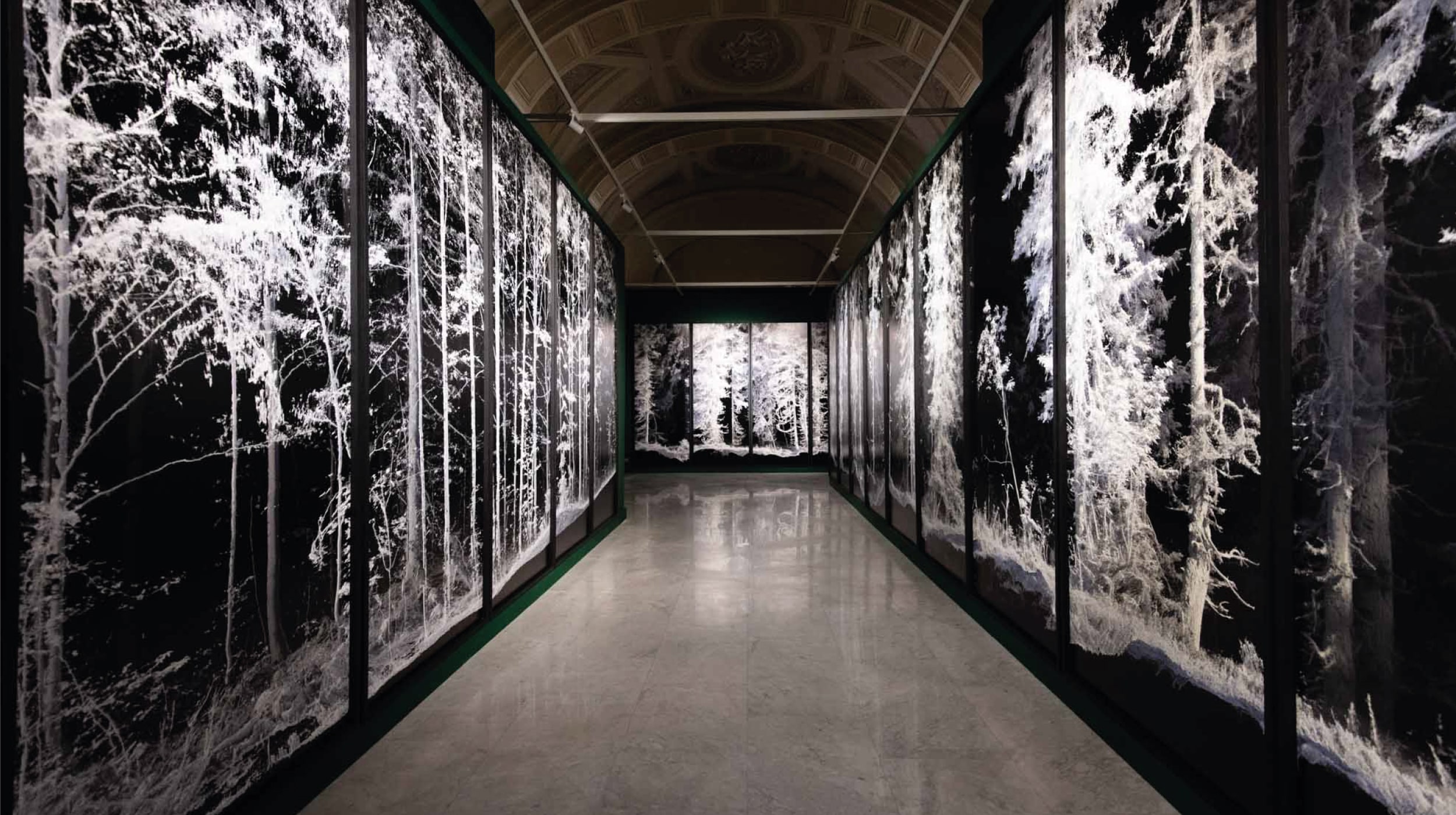
PALAZZO CIPOLLA
In 2010, Fondazione Roma was able, thanks to careful and prudent financial management, to ensure continuity to institutional activities and increase its assets by purchasing, from Unicredit Real Estate, the historic Palazzo Cipolla.
Its origins date back to 1862, when the Cassa di Risparmio di Roma, under the leadership of Prince Camillo Aldobrandini, purchased Palazzo Jacovacci from the administration of the San Giacomo Hospital. This palace, an ancient residence belonging to the Jacovacci de’ Facceschi brothers, had been donated to the hospital in 1600. Palazzo Cipolla was later built on the same site, which in 1874 became the headquarters of the Cassa di Risparmio di Roma, transferred from the sixteenth-century Palazzo Borghese.
In 2002 the Cassa di Risparmio merged into Capitalia, which in 2007 was incorporated into Unicredit, as a result of which Unicredit Real Estate became the owner of the building until the recent purchase by the Foundation.
The demolition of Palazzo Jacovacci began in 1868. The excavation work led to the discovery, during the excavation of the foundations, of some fragments of the Roman arch of Claudius.
The Palace was solemnly inaugurated on November 29, 1874, under the presidency of Prince Carlo Barberini, Captain Commander of His Holiness’s Noble Guard, and was named after its architect, Antonio Cipolla. David Silvagni wrote: “The magnificent palace with the design of the excellent architect Cipolla is undoubtedly the best among the new buildings of Rome” (La Corte e la Società Romana nei secoli XVIII e XIX).
It can reasonably be affirmed that Palazzo Cipolla, built between 1869 and 1874, is at the same time the last significant architectural work of Pius IX’s Rome and the first of Rome as the Capital.
Antonio Cipolla won the competition for the construction of the Palace in 1864, with a project that combined two styles and two eras, pure Florentine Quattrocento and a generic Roman Cinquecento. As Marcello Piacentini wrote, “Cipolla was the first to attempt to create an Italian style by drawing inspiration, in a fully academic climate, from schemes of the past”.
The Architect had a leading role in the urban renewal of Rome as Capital. He was appointed vice president of the Commission tasked with studying the new building arrangement of the city, restored the Palazzo del Quirinale, which had by then become the residence of the sovereigns of Italy, where he built the stables.
The Sala del Consiglio (Council Hall) and the Sala dei Marmi (Marble Hall) testify to the great architectural interest of the Palace’s interiors. The decorations were executed by sculptor Oreste Garofoli, author of the high relief in the lunette of the central window of the balcony, and by painters Natali, Basilli and Bruschi. Bruschi also painted the allegorical canvas at the center of the ceiling of the Sala del Consiglio, depicting Peace with Abundance and Savings at its sides.
In 1933, under the presidency of Marquis Carlo Giulio Clavarino, the central public hall was expanded and new office spaces were created, on the ground floor and first floor. A new staircase replaced that of architect Cipolla and new entrances were created on the Corso and on Via di Montecatini.
Further work was carried out by architect Clemente Busiri Vici in 1948, under the presidency of Marquis Giuseppe Dalla Chiesa: direct access from the Corso to the central hall was opened and the vehicular atrium on Via di Montecatini was modified, giving a more unified character to the entire complex.
From 1953 to 1955 the same Busiri Vici completed the work and reclaimed all the basements: the floor level was lowered, the heating and ventilation system of the underground was renovated and a large room for safety deposit boxes was created, the so-called caveau.
ART EXHIBITIONS
Palazzo Cipolla represents the exhibition venue of the Museo del Corso – Museum Hub.
Already active as a venue for temporary exhibitions, it has hosted exhibitions of undoubted relevance since 1999. Today it offers an extended program of cultural events and temporary exhibitions of outstanding artistic quality, organized in collaboration with prestigious public and private museum institutions, both national and international.
What most characterizes the exhibition activities of Palazzo Cipolla is their pronounced social focus. Each exhibition is conceived not as an end in itself, but becomes a concrete tool to promote initiatives with social impact.
The art exhibitions at Palazzo Cipolla provide a unique encounter with beauty that is revealed through selected works and exhibition paths studied in the smallest detail. Each exhibition is conceived to be a unique experience, capable of involving the visitor not only as an observer, but as an integral part of a visual narrative. The care devoted to each exhibition’s installation is manifested in the choice of works, in the arrangement of spaces and in the lighting that enhances forms, colors and details.
Nothing is left to chance: each element interacts with the others, creating a refined balance that guides the spectator through a captivating journey.
Public engagement is at the center of the experience also, when possible, through multimedia supports, interactive paths and immersive installations. The spectator is transported inside the work, experiencing direct interaction with the artist’s world. Each exhibition thus becomes a narrative, a journey that unfolds between unexpected suggestions and unprecedented perspectives, awakening in the visitor the desire to look at the world with new eyes. Experiences capable of bringing a vast audience closer to the universal language of art.